Black Streaks on Roof — Gloeocapsa Magma Explained
Gloeocapsa magma ID, why streaks return without biocide, NC humidity enabler, treatment lifespan.
From what we see every day at Elite Pressure Washing Raleigh, the moment dark stains appear on a home, the curb appeal immediately takes a hit. Many homeowners assume the asphalt is dissolving or breaking down from age.
The reality is quite different, and dealing with it requires a specific approach.
We are going to break down the science behind the black streaks on roof gloeocapsa magma, look at what the regional weather data tells us, and walk through the exact workaround our technicians use to solve the problem.
Black Streaks on Roof Gloeocapsa Magma: What It Actually Is
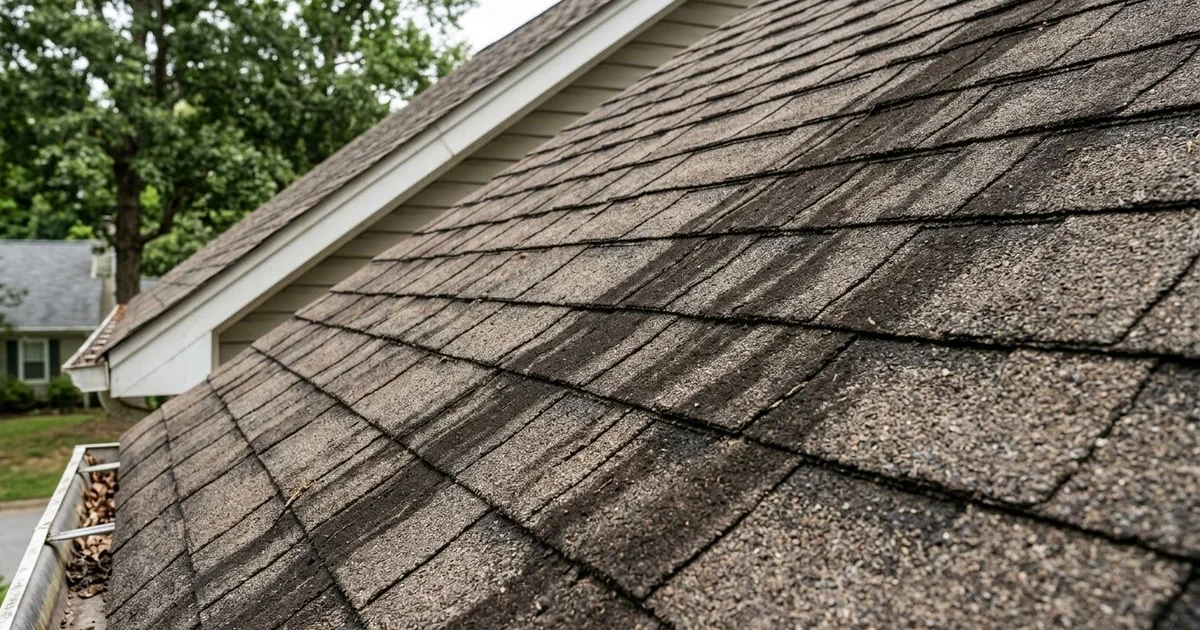
Those dark stains running down the north and shaded slopes of nearly every Raleigh roof are caused by a single hardy bacterium called Gloeocapsa magma. It is a living organism that has evolved to thrive on asphalt shingles, feeding on the limestone filler baked into the granules.
As noted by environmental researchers, this organism is technically a cyanobacterium, which is a prehistoric species over three billion years old. It appears blue-green under a microscope, but it secretes a dark protective outer sheath to shield itself from UV rays. That dark coating creates the ugly discoloration you see from the driveway.
Here are a few key facts about how this organism operates:
- It feeds exclusively on calcium carbonate, commonly known as limestone.
- According to roofing industry history, manufacturers added limestone to fiberglass shingles starting in the 1970s to increase weight and durability.
- The streaks always run vertically because rain pulls the multiplying cells downslope.
- Colonies concentrate on north and shaded slopes where moisture lingers.
Why NC roofs get hit so hard
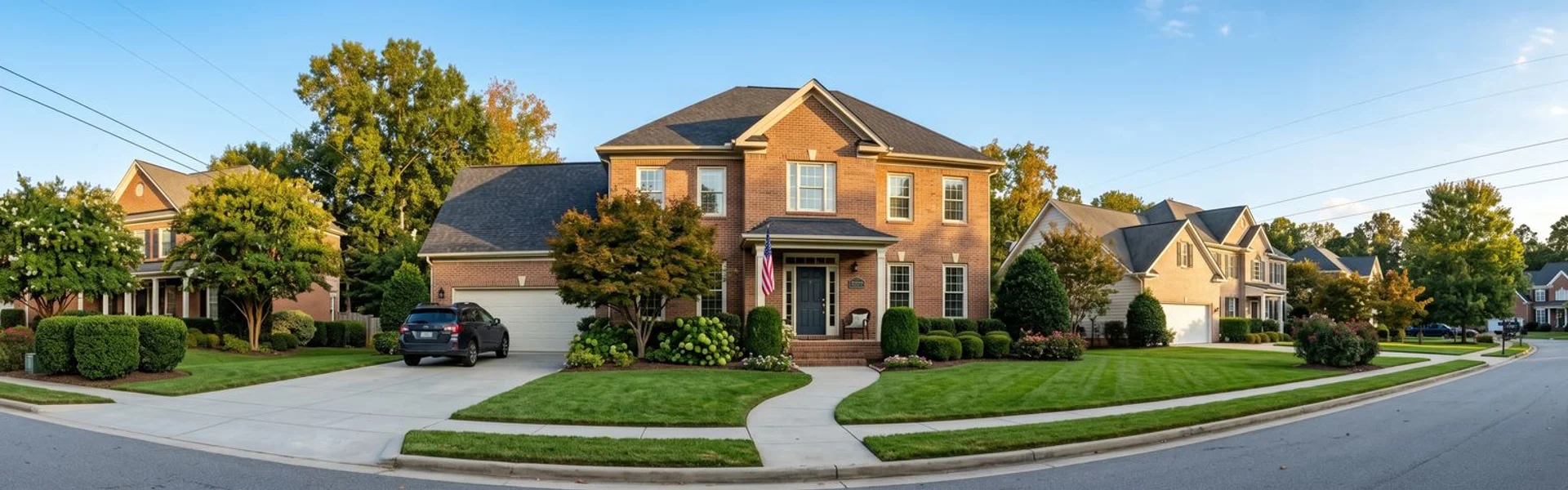
The Triangle area provides the perfect habitat for Gloeocapsa magma to thrive, thanks to a combination of high moisture and plenty of shade. Our team constantly treats homes across Raleigh, Cary, Wake Forest, and Durham that show heavy streaking within five to eight years of installation.
Raleigh receives over 46 inches of rain annually, which creates an incredibly hospitable environment for biological growth. A 2024 FDP Mold Remediation study found that the high average temperatures, heavy rainfall, and 70-85% summer humidity in the Southeast create ideal conditions for biological colonization on homes. The moisture essentially turns an asphalt surface into an all-you-can-eat buffet for the bacteria.
Several specific local factors accelerate this growth:
- High humidity keeps shingle surfaces moist for hours after a summer storm.
- Heavy tree canopy filters UV light in older neighborhoods.
- The active growth season stretches from March through October.
- Airborne spores catch the wind and spread rapidly from house to house within subdivisions.
By the time a roof is 12 to 15 years old, most untreated surfaces have significant biological buildup.
Why pressure washing doesn’t actually solve it
The most common DIY response to roof black streaks is pulling out a pressure washer, which usually strips away the shingle granules and causes irreversible damage. We highly discourage this method because it only removes the surface biomass without killing the microscopic spores.
Standard power washers operate between 1,500 and 3,000 PSI. That amount of mechanical force instantly dislodges the ceramic-coated granules that protect the asphalt layer from the sun. Major manufacturers like GAF offer 25-to-30-year StainGuard Plus warranties, but using high pressure will void those protections immediately.
The True Cost of High Pressure
| Pressure Washing (Incorrect) | Soft Washing (Correct) |
|---|---|
| Uses 1,500+ PSI | Uses sub-100 PSI |
| Voids manufacturer warranties | Endorsed by roofing manufacturers |
| Strips protective ceramic granules | Preserves granule integrity |
| Forces water under shingle laps | Gently applies treatment to surface |
| Leaves living spores behind | Kills the organism completely |
The streaks reappear within months because the spores survive the aggressive rinse. Your shingles age years overnight from granule loss, and the warranty is gone forever.
How soft wash actually kills it
The correct way to remove roof algae nc is through soft washing, which uses specialized chemistry at a pressure lower than a standard garden hose. Our preferred technique adheres to the cleaning guidelines set by the Asphalt Roofing Manufacturers Association (ARMA).
The ARMA-endorsed method requires a low-pressure application of sodium hypochlorite mixed with water. Professionals also blend in specific soaps, called surfactants, which help the chemical mixture cling to sloped surfaces rather than running off into the gutters. This creates a 10 to 15-minute dwell time that allows the solution to penetrate and kill the organism at the root.
Soft wash roof cleaning relies on this careful balance of chemistry at sub-100 PSI. A low-pressure rinse then removes the dead biomass, and over the following weeks, natural rainfall finishes lifting the dead organism off the shingles so the discoloration visibly fades.
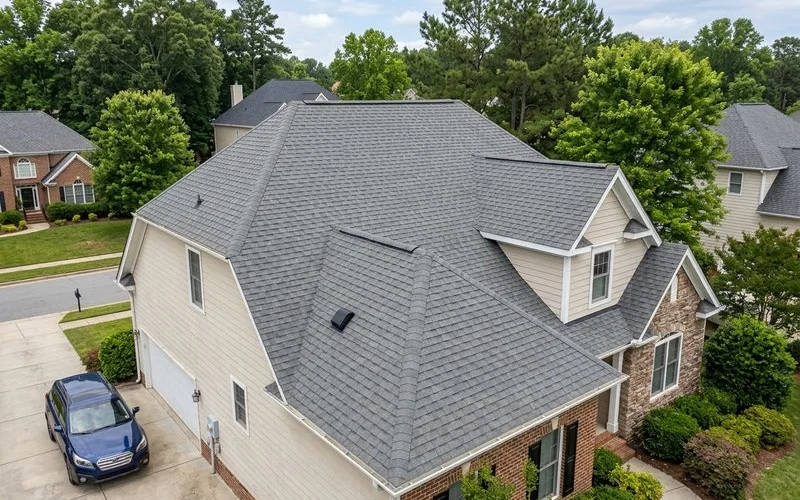
Here is what you can expect for a treatment lifespan in the Triangle:
- Typical durability is three to five years before re-treatment is needed.
- Heavily shaded north-facing slopes may require attention every two to three years.
- Preventative treatments cost significantly less than early roof replacement.
Conclusion
Addressing the black streaks on roof gloeocapsa magma is a crucial step in protecting your property value and extending the life of your shingles. Leaving the organism to feed on the limestone will only accelerate costly deterioration.
Reach out to a qualified professional today to schedule a gentle, warranty-safe cleaning.
We are always ready to help you evaluate your property and recommend the safest approach. Give your local experts a call to restore your home’s exterior today.
Frequently Asked Questions
Will the streaks come back after cleaning?
Can I prevent the streaks from coming back?
Are black streaks dangerous?
Learn more about
Soft Wash Roof CleaningSub-100 PSI roof soft washing that kills Gloeocapsa magma, lichen, and moss without damaging asphalt shingles or voiding manufacturer warranties.
Related Guides
How Often Should You Have Your Roof Cleaned in Raleigh?
3-5 year general cadence; tree-shade and north-slope acceleration; post-storm inspection prompts.
Will Roof Cleaning Chemicals Harm My Landscaping?
Pre-wash plant protection, runoff containment, sodium hypochlorite dilution, what to do if plants stress.
How Much Does Roof Cleaning Cost in North Carolina?
NC roof-cleaning prices by size and pitch, story differential, severity scaling, gutter bundle savings.
Will Roof Cleaning Damage My Asphalt Shingles or Void Warranty?
ARMA position, GAF/Owens Corning stance, why pressure wash voids warranty but soft wash doesn't.